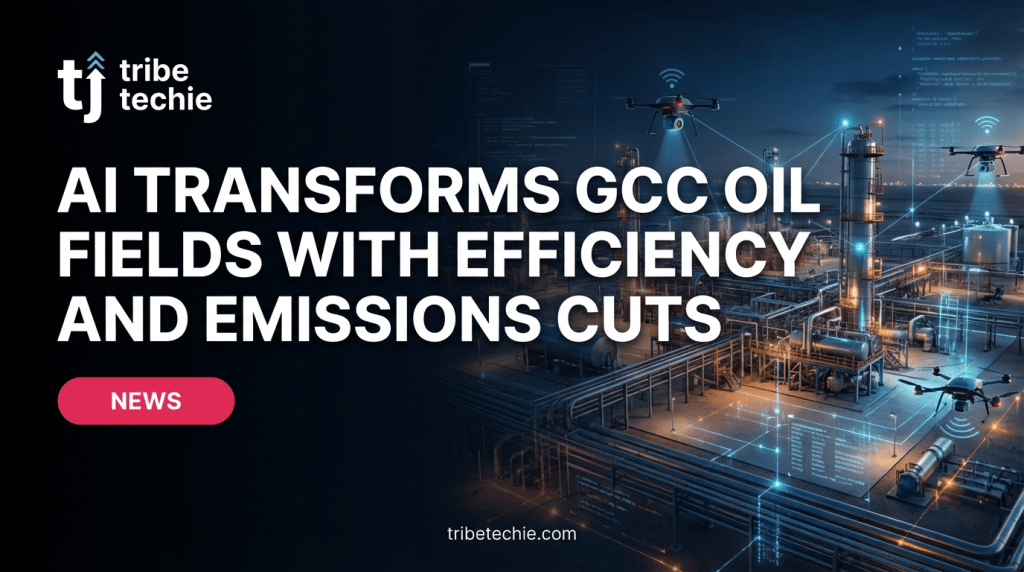
AI is transforming GCC oil fields with digital twins, boosting efficiency, cutting emissions, and reshaping energy production across Saudi Arabia and the UAE.
Energy producers across the Gulf Cooperation Council are accelerating the use of artificial intelligence to improve operational efficiency and reduce the environmental impact of oil and gas production.
Also Read: Abu Dhabi Launches $100M GreenHorizon Fund for Climate Tech
Major players such as Saudi Aramco and Abu Dhabi National Oil Company are deploying advanced systems, including “digital twins”—virtual replicas of physical oil fields that simulate geological and mechanical processes in real time.
These AI-powered models allow engineers to monitor performance, optimize extraction rates, and predict equipment failures before they occur.
By improving operational precision, companies can reduce downtime, limit methane emissions, and minimize energy waste—key priorities as the industry faces increasing pressure to decarbonize.
It is also transforming upstream exploration. Machine learning tools analyze seismic data with greater accuracy, helping identify resource deposits while reducing the environmental footprint of exploratory drilling.
Its integration into oil and gas operations is creating new opportunities for startups specializing in industrial applications, from predictive maintenance to data analytics platforms.
This trend is contributing to the emergence of a regional ecosystem focused on industrial AI innovation.
Data generated from the operations is increasingly being used to support carbon capture and storage (CCS) technologies, further aligning with emissions reduction strategies.
However, the approach remains debated. Critics argue that improving fossil fuel efficiency may extend reliance on hydrocarbons, while proponents view it as a necessary step in reducing emissions during the global energy transition.
As its adoption scales, the GCC is positioning itself as a leader in applying advanced technologies to traditional energy sectors—bridging the gap between industrial infrastructure and digital innovation.
Why AI Transforms Matters to MENA
Its by energy giants like Saudi Aramco and Abu Dhabi National Oil Company signals a critical shift in how the Gulf Cooperation Council approaches energy production.
As global pressure to reduce emissions intensifies, improving efficiency in existing oil operations becomes a practical pathway for lowering environmental impact while maintaining economic stability.
At the same time, this trend is accelerating the growth of industrial AI ecosystems in the region—creating opportunities for startups, engineers, and data specialists to build solutions at the intersection of energy and technology.
Ultimately, it positions MENA not just as an energy supplier but as a leader in applying advanced technologies to complex industrial systems.