Abu Dhabi–based CNTXT AI has launched an Emirati Arabic text-to-speech model, as demand grows for localized artificial intelligence systems across the Gulf.
The product, named Munsit Emirati TTS, converts written text into spoken Emirati Arabic in real time and is designed for deployment across sectors including banking, government services, and telecommunications.
Also Read: Creative Zone Launches UAE Program for Young Entrepreneurs
The company said the system focuses on dialect accuracy, tone, and natural speech patterns, addressing limitations in existing voice technologies that are largely built on non-Arabic datasets.
CNTXT AI reported that in internal blind tests involving Arabic-speaking participants, 93% preferred the model over global alternatives in terms of naturalness, emotional expression, and dialect accuracy.
Voice automation is increasingly used in customer service operations, where it can reduce costs and improve response times. Industry estimates suggest efficiency gains of between 20% and 40% in high-volume environments such as contact centres.
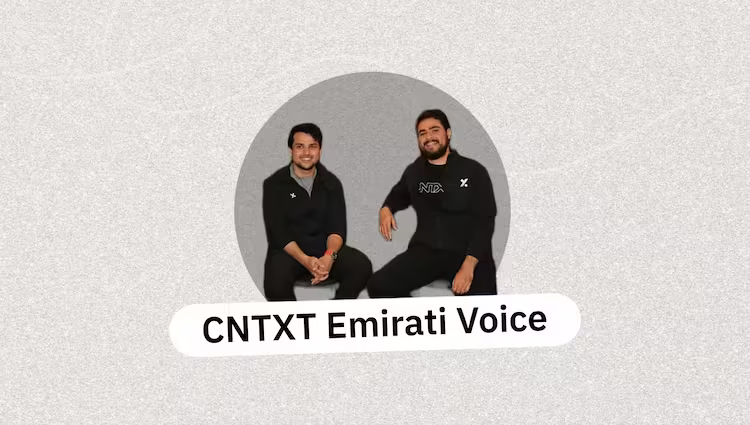
Mohammad Abu Sheikh, founder and chief executive of CNTXT AI, said aligning AI systems with local language use is critical to improving user trust and engagement. Shameed Sait, the company’s AI director, said the model was designed to capture linguistic nuance while maintaining performance at scale.
The launch comes as organisations across the MENA region invest in locally developed AI systems, with a focus on language relevance and data sovereignty.
CNTXT AI provides data and AI services, including model training, annotation, and deployment tools.
Why CNTXT AI Matters to MENA
The launch by CNTXT AI marks a broader shift across the MENA region toward locally developed AI systems that reflect regional languages and identities. As voice becomes a primary interface for digital services, dialect accuracy is emerging as a critical factor for user trust and adoption. This move signals a growing investment in sovereign AI capabilities, where performance is matched with cultural relevance, particularly in sectors such as banking, government, and telecommunications, where communication quality directly impacts user experience.