



Trust is the foundation of every meaningful relationship, a subtle yet powerful force in our daily decisions.
Leading companies recognize that customer trust isn’t just a nice to have; it’s critical, much like the shared trust that underpins any strong relationship. According to PWC, 93% of business executives agree that building and maintaining trust with their customers improves their revenue.
In product development, trust means users believe your product will consistently meet—or even exceed—their expectations.
Just as trust in any relationship grows when promises are kept, a customer builds trust each time a product delivers on its promises, driving long-term customer loyalty.
In this blog post, I’ll show you how to use trust as a differentiation strategy for your product.
Trust as a market differentiator
Companies launch countless products daily, making it difficult for consumers to choose and discover the right products to meet their needs.
Some businesses use clever ways to keep their products top-of-the-shelf, but trust is the best way to stand out. People will consistently choose products they perceive as trustworthy. 88% of people say they factor in trust before buying from a brand.
To build trust in a product, the first question you must answer is: how can you get potential customers to trust something they’ve not yet tried?
The short answer is to build for trust early in your product interactions because first impressions do matter.
Trust starts to build at first contact, and your product’s reputation begins to form when users first engage with it. Every interaction from then, whether a smooth onboarding process or a flawless feature delivery, builds or breaks that trust. That makes it important to treat every touchpoint as an opportunity to build trust.- Nnamdi Awili[1], Head of Design at Kora
The first time users interact with your product, they start to trust you, which shapes their perceptions and influences their decision to engage further.
For instance, from the first interaction with the Airbnb website, users get a clear, transparent value proposition; a platform to discover and book unique stays around the world.
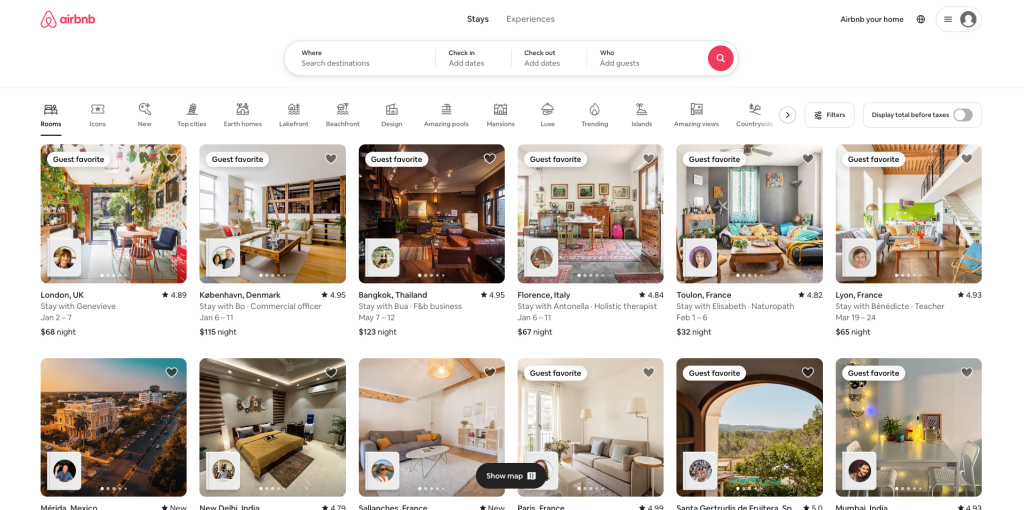
This clarity eliminates confusion, sets expectations, and establishes a sense of reliability.
Transparency is the cornerstone of trustworthy products.
A transparent product communicates its purpose, capabilities, and limitations openly and early, fostering a sense of honesty and respect between the business and its customers.
The competitive advantage of trustworthiness in products
Trustworthy products naturally attract loyal users, who return and advocate for the product within their networks.
This word-of-mouth recommendation, fueled by trust, can drive organic growth faster than any marketing campaign.
When users trust a product, they are more willing to explore its features, engage deeply, and even forgive occasional missteps, as they believe in its overall reliability and intent.
Trust also reduces friction during critical moments, such as making a payment, sharing personal information, or committing to a subscription. Products that inspire trust reduce user hesitation, resulting in higher conversions, better retention, and increased lifetime value.
Trust isn’t just a feel-good element—it’s a strategic advantage. By prioritising trust, you’re not just designing a product but cultivating an enduring brand legacy.
Building trust early in product development
1. Understand your users deeply
Trust begins with understanding your users. Product teams must invest time and resources in uncovering not only users’ needs but also their behaviours.
While users may share similar needs, their behaviours often differ.
For example, if you’re building a payment product for Africa, you can’t assume that users across the continent behave the same way.
Because of cultural differences, users in North Africa might behave differently from users in West Africa and South Africa.
Go deeper on GCC & Africa tech — $9.99/month.
Deep dives and investor insights the free digest doesn't cover.
When you gain these insights early, you can build personalized, relatable solutions that resonate with users, fostering a trusting connection.
At Kora, we gain insights by conducting user and customer interviews. We try to understand their biggest challenges and then use these insights to make product updates. This helps reinforce trust.
Another way we gain insights is to use tools that help understand user behaviour and how people interact with our dashboard. For example, Mixpanel and Microsoft Clarity show heatmaps that help us see which parts of our products users interact with frequently. This gives us deep insights into user behaviour.
2. Ensure consistency in design
Consistency fosters predictability, which ultimately causes your users to trust you.
Users who encounter consistent design patterns and interfaces feel more confident navigating the product. This reduces friction and encourages exploration.
When you create a seamless experience, users are more likely to trust your product to deliver reliably.
To build predictability, use a cohesive design language across the product. In addition, design consistency should be aligned with engineering implementation to maintain uniformity across platforms.
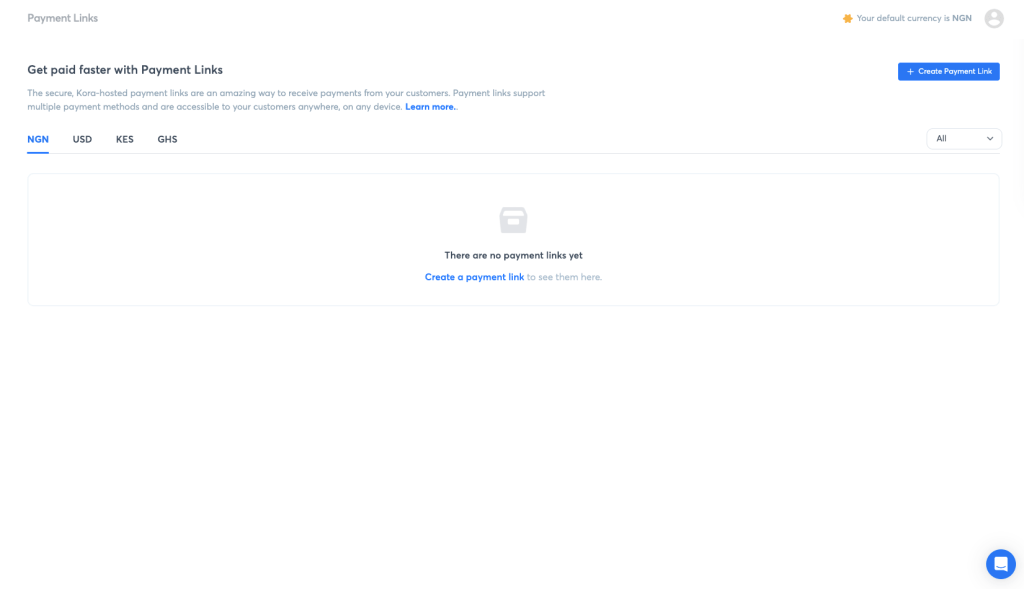
One way we’ve done this at Kora is to build a product design system that ensures our products have reusable elements. When users interact with our dashboard and repeatedly see these elements, they learn to recognise them subconsciously and trust us.
An example of a reusable element is a table. We use the same table across all our products.
Colour palettes, typography, and layouts are also reusable elements from the design system. Although they might look very small, this consistency in reusing elements builds trust.
For example, on Kora’s dashboard, the typefaces for the product pages are the same across the Kora dashboard—the same as the colour palette for the typefaces, buttons, and other elements.
3. Use familiar elements
Seeing familiar elements like UX patterns and flows makes users feel at ease.
When you incorporate well-known UX patterns and design elements into your product, it can significantly lower your users’ learning curve and build trust faster.
Think of it like trusting a friend of a trusted friend—users instinctively trust something they recognize.
It’s important not to overcomplicate your user experience with unnecessary innovation. This approach accelerates adoption while making users feel comfortable with the product. That’s why it’s important to do competitive analysis and benchmarking, especially when you don’t have a first-mover advantage.
For example, we built a particular feature with a flow we thought our users would love but we noticed they struggled. After doing competitor research, we discovered that multiple payment companies had a similar UX flow for this feature.
Then, we redesigned it to follow that similar UX flow with our elements, and adoption skyrocketed. If you’re keen on building an entirely different flow in your product, one way to approach this is to first follow the common industry flow to build trust, then slowly introduce the new flow over time.
This way, adoption is smooth, and you don’t lose your customers’ trust.
4. Incorporate trust metrics from day one
To build trust effectively, teams need to measure it. Metrics like Net Promoter Score (NPS), Customer Satisfaction Score (CSAT), and Lifetime Value (LTV) provide insights into how users perceive your product’s reliability and value.
Use these metrics early to track user sentiment and iterate quickly. A strong NPS or CSAT indicates that users understand and value the product, which is a key marker of trust.
By monitoring these metrics, teams can make data-driven improvements reinforcing user confidence.
In conclusion, building trust isn’t a one-time effort—it’s a continuous process that begins in the earliest stages of product development.
Product teams can create solutions users trust by understanding users, delivering consistent experiences, incorporating familiarity, and tracking trust metrics.
When trust becomes part of your product’s DNA, it lays the foundation for customer loyalty and eventual long-term business stability and success.
Engagement