It’s thrilling to think about the future as we see everyone buzzing about innovations such as AI, cryptocurrency, and even flying taxis. However, amid all the excitement, something remarkable is on the verge of emerging right under our noses—the AgTech revolution!
Have you ever pondered where your next meal will come from or how a country will manage its food supply? This is set to become a significant topic in the coming years.
In the MENA region, AgTech is becoming a major player. It’s not just a flashy trend; it has a real impact on everyone, our food supply! As the region grapples with climate challenges, water shortages, and a growing population, a new type of farmer is emerging—one who is tech-savvy, with a smartphone in one hand and soil sensors in the other.
Let’s be honest for a moment: the Middle East and North Africa have a lot of desert, over 85%. With scarcity of water and limited arable land, the situation is challenging..Yet, as the population grows, so does the demand for food, creating a pressing need for innovation.
However, a pressing concern looms: MENA currently imports more than 50% of its food, and in countries like Kuwait and Qatar, that reliance exceeds 90%. This could spell trouble if there’s a disruption in shipping, potentially leaving shelves empty.
So, what’s the way forward when the land can’t keep pace and global unpredictability prevails? The answer lies in innovation! We’re on the brink of breakthroughs in AgTech—think digital farming, smart irrigation systems, and climate-controlled greenhouses, along with an array of clever solutions.
This approach is set to revolutionize how the region produces food, making it smarter and more efficient. Exciting times are ahead for food and farming.
Saudi and the UAE: Farming Innovation in the Desert
Red Sea Farms, the Saudi Arabia-based startup, is innovatively growing tomatoes using saltwater and solar energy. That’s right—saltwater, not freshwater. This approach is not just a gimmick; these greenhouses reduce freshwater usage by up to 90%. This means hundreds of liters are saved for every kilogram of tomatoes produced in a desert.
Meanwhile, the UAE is showcasing its own advancements with Pure Harvest Smart Farms. They have developed futuristic greenhouses that yield over 30 times more food per square meter compared to traditional open-field farming. The company now supplies leafy greens and tomatoes to more than 200 supermarket chains and restaurants throughout the Gulf region. They rely on digital farming techniques rather than guesswork to manage operations.
The UAE government is serious about agricultural technology, having invested $100 million in AgTech projects as part of its Food Security Strategy 2051.
The lesson? Where there is technology, there is the potential for a harvest, even in the desert
Egypt’s Turning the Nile into a Smart Farm
Let’s explore the Nile, a vital region where more than 40% of Egypt’s workforce is engaged in agriculture. Despite the challenges posed by floods, droughts, and unpredictable weather patterns, there is a positive shift happening in this sector
The government has partnered with the World Bank and other organizations to equip farmers with user-friendly mobile apps that deliver essential benefits, including:
- Real-time weather alerts to help farmers plan effectively
- Recommendations for optimal planting and irrigation times
- Early warnings about potential crop diseases
These innovative tools have already proven effective, with farmers who adopted them reporting impressive yield increases of 15 to 25% in just one season. This progress not only enhances agricultural productivity but also ensures greater food security for communities.
North African Countries Lead in Water-Smart Solutions
If there’s one thing you learn quickly in North Africa, it’s that every drop counts.
In Morocco, where rainfall has dropped by 40% in the last two decades, AgTech is helping farmers make every drop count. Smart irrigation systems now allow farmers to water crops with laser precision, reducing waste and boosting yields.
In Tunisia, a local digital platform called ezzayra.com is quietly revolutionizing farming. It connects farmers directly with seed suppliers, crop advisors, and buyers. That means better prices, faster delivery, and fewer losses from intermediaries.
And the greatest thing is Tech speaks their language, literally. Most of these apps are localized in Arabic and French, with voice-note features for non-literate farmers.
The Youth Are Embracing AgTech and Digital Farming
Farming is getting cool again!
Young, tech-savvy folks across the MENA region, who used to ditch rural life, are coming back with some fresh ideas. Instead of old-school tools, they’re armed with drones and coding skills. They’re launching AgTech startups, setting up training cooperatives, and changing the whole farmer game.
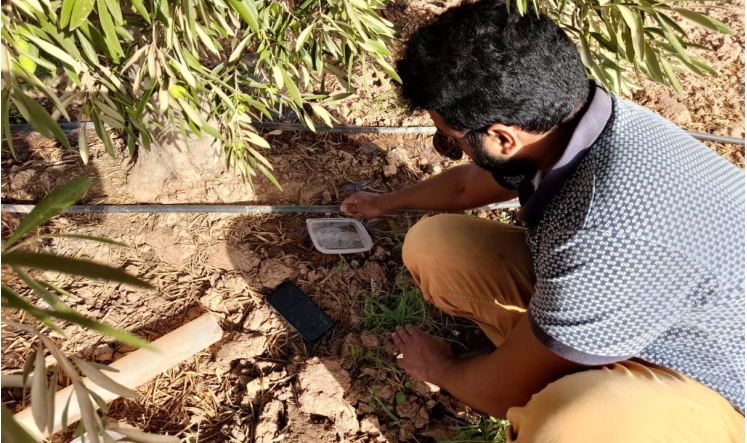
Take Ayman, for example. He’s a 27-year-old from Egypt who studied computer science and started a WhatsApp service to help farmers figure out the best prices for their crops and find buyers. In just six months, he linked up over 500 farmers with new markets.
AgTech isn’t just about solving problems; it’s also creating jobs and bringing some serious hope to the scene.
VCs Are Catching Up
Even though global startup funding has taken a bit of a hit, the AgTech scene in the MENA region is still going strong! Exciting startups like Baramoda in Egypt, which transforms farm waste into organic fertilizer, and RipePlanet in the UAE, making indoor farming easy and accessible, are catching the attention of investors.
According to AgFunder, even with a dip in climate-smart investments around the world, AgTech is still a fantastic opportunity in MENA. And why is that? Because food security is something we all care about!
Governments in the region are stepping up, too. The UAE, for instance, has launched the National Food Security Strategy 2051 to become one of the top 10 food-secure nations globally. Jordan, Qatar, and Oman are also joining in by creating digital agriculture roadmaps, complete with grants and tax breaks for innovative Ag companies.
What’s really great is that these initiatives aren’t just for the big players; they’re also designed to help smallholder farmers, who produce as much as 80% of the food in some MENA countries. It’s all about supporting the people who feed us!
Food Security Needs More than Rainfall
We understand the reality that rain may not be returning as we had hoped, but it’s heartening to see that innovation is stepping up to fill the gap. In the MENA region, agricultural innovation is bringing forth real solutions, even in some of the most challenging environments.
This is not just a small detail; it’s a story of resilience and transformation. Farmers are evolving into tech leaders, deserts are becoming food hubs, and what once seemed like crises are now opportunities for growth and change.
So, the next time you savor a Gulf-grown tomato or a Moroccan fig, take a moment to appreciate the journey it took to get to your table. Each bite represents the hard work, creativity, and perseverance of those who believe in making a difference, even in the face of adversity.
The Takeaway?
AgTech in the MENA region is more than just a passing trend or a popular hashtag; it’s crucial for survival in an area that simply cannot afford to wait for rain.
From innovative salt-resistant greenhouses in Saudi Arabia to sensor-equipped fields in Egypt, the challenges faced by farmers are real and pressing.
We understand how important it is to make every seed count and to conserve every precious drop of water. Although AgTech may not attract the same excitement as AI or cryptocurrency, it plays a vital role in nourishing communities and supporting livelihoods across the region.
Together, we can embrace this technology to secure a better future for everyone.