
When you sit with Yulii, CEO Paintit.ai, the first thing you notice is not the fact that he’s a founder, or that his company has users across the world, or that he talks about AI with the calmness of someone who has been doing it for decades. What you notice is how deeply he still identifies as an architect. Not a CEO, not a tech guy, but definitely an architect.
He talks about homes the way chefs talk about flavour, with memory, with instinct, and an understanding that goes beyond the “what” into the “why.” For more than 15 years, that was his world. Kyiv, client meetings, sketches on tables, mood boards, spaces stitched with stories. He built a company there—a reputation and a rhythm.
And then the quiet moments started happening. Friends calling and saying, “Can you help me choose furniture?” or “Does this even fit my space?” or “Please, just tell me what to buy.” Those small requests didn’t feel like work. They felt like glimpses into a bigger gap, a gap the industry had ignored because professional interior design was expensive, exclusive, and slow.
“I knew there had to be something that helped more people than I ever could manually,” he said. “Something accessible.”
He’d written the idea of Paintit.ai down. Kept it somewhere between “maybe someday” and “this could be huge.” And it might have stayed there forever if the war hadn’t shattered everything around him. Clients disappeared overnight. Projects froze. The life he built paused in a way that didn’t feel temporary.
And in that suspended moment, grief, uncertainty, and the quiet kind of courage that comes when you’ve lost your map, he picked up the idea again.
“It was the only direction that made sense,” he said simply.
The beginning that didn’t look like a beginning
Some startups crawl into existence. Paintit.ai sprinted.
Yulii and his team pulled together a tiny amount of money from friends. Not investor money, not institutional support, just people who believed in him. It was enough to get an MVP up and the legal paperwork done.
And then it happened, the first shockwave. 5000 visitors in one week. Five thousand.
“When we saw that number, we knew. We knew we were building something people were quietly waiting for.”
But like every founder learns quickly, early momentum has the lifespan of a firework. Beautiful for a moment, then gone. And when the money finished, the reality set in. They did what founders do: they worked, earned, stretched every resource, tried to raise funds, patched gaps with whatever came in.
He laughs when he calls those months “interesting,” the way people laugh at memories that weren’t funny at the time.
But they kept going. Eventually, QDB believed in the vision enough to lead their seed round, and that changed the atmosphere completely. For the first time, Paintit.ai had runway, clarity, and actual hours in the day to focus on building.
What he’s really fixing
Interior design sounds like aesthetics, but it’s not. It’s decision fatigue, overwhelming. The kind of uncertainty that makes people keep the same old furniture for years, because they don’t know where to start.
People go online. They scroll for hours. They screenshot. They compare colours on screens that lie. They guess, they hope, and eventually, they give up.
“People don’t see the full market,” he explained. “They don’t know quality. They don’t know if something fits their style. They don’t even know how to express what they want.”
So Paintit.ai became a guide, one that understands style, budget, preferences, location, and even the mood the person is trying to create, then pulls everything together into something clear and shoppable.
Not just pretty images, a full path.
“It’s like having someone hold your hand,” he said, “from the first spark of the idea to the moment the furniture arrives at your door.”
That’s the heart of it.
Not AI for the sake of AI — AI that solves the mess of modern interior decision-making.
The long vision for Paintit.ai
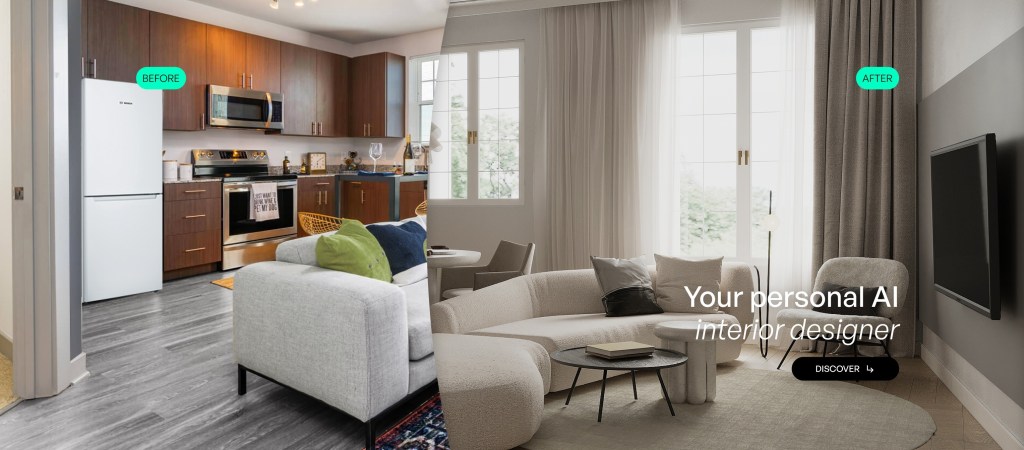
Short-term, the team at Paintit.ai are building what they call the “architectural chart”, something that gathers everything a user wants and keeps it in one place as the design evolves, a living project, not a static file.
Long-term? He says it calmly, like it’s obvious:
“From inspiration to your door.”
Not designed as images. Not designed by imagination. Design as something you can live in.
The hardest balance: a designer’s instinct vs a machine’s logic
For most people, picking a style is a Pinterest board, for Yulii, it’s psychology.
An interior designer doesn’t just listen to what clients say. They listen to what they’re trying to say. “Warm” can mean a hundred things. “Sky blue” can mean softness or boldness, or nostalgia.
Trying to train an AI to understand those layers? That’s a different kind of challenge.
“We’re still early,” he admitted. “But we want the system to understand people almost the way a palm reader would, quietly, intuitively, deeply.”
He knows it won’t be perfect for everyone. People are too varied, too personal. But each iteration gets them closer.
The world, languages, and the truth about AI startups
People hear “AI startup” and imagine a giant model being trained in a secret lab.
He just shakes his head.
“Most startups use APIs. Like us. AI is a tool, not the full identity.”
They’re already working on multiple languages, Arabic, Brazilian Portuguese, and others, based on analytics. They’re letting users guide where they should grow next.
It’s not a grand strategy. It’s a grounded one.
What he wants founders to know
There’s one part of the story he, unlike other founders, shares without dressing it up.
“In the beginning, we got so many rejections,” he said. “So many. VCs, angels — everyone.”
And many of those rejections came not because the idea was weak, but because of timing.
“When we started, AI was too new. Investors were careful. They told us, ‘Let’s talk in one year.’”
A year is a long time when you’re building something you believe in.
Most people would stop, but Yulii didn’t.
His advice isn’t poetic. It’s not motivational. It’s just true.
“Be patient. Believe in your work. A ‘no’ isn’t the end. It just means not now.”