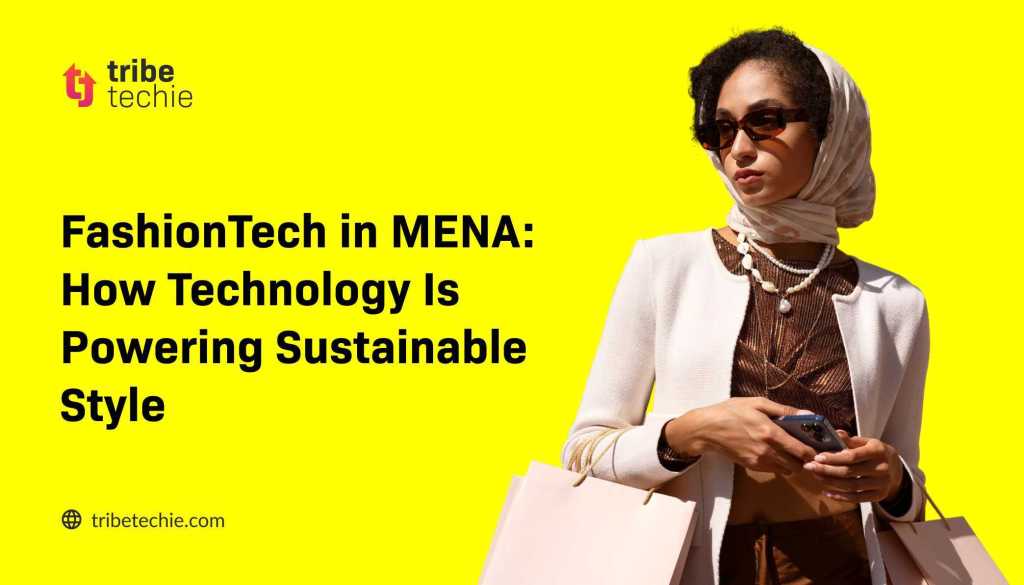
If you walk through Riyadh Boulevard, Cairo Festival City Mall, or Dubai Design District today, you’ll instantly notice that FashionTech has left the future to become the dress code of right now.
Shoppers scan QR codes before they scan price tags. Influencers try on outfits powered by AR mirrors. And young designers across the MENA region are treating sustainability as a baseline, not a bonus.
What once felt experimental has quietly become a movement: technology is reshaping how we design, shop, and think about style in a region where trends travel fast and innovation travels even faster.
The Middle East has always loved fashion, but what’s happening now feels different. Major players are leaning into sustainability because consumers are demanding receipts.
A 2023 Bain & Company study found GCC shoppers increasingly gravitate toward brands that can prove ethical sourcing and environmental responsibility. FashionTech makes that proof visible, trackable, and almost impossible to fake.
Blockchain, But for FashionTech
Across Dubai and Doha, blockchain-verified supply chains are leaving the pilot-project phase and entering retail floors. Startups like Omnichain and Evrythng have been working with global fashion brands to trace materials from origin to outlet.
While these aren’t MENA-only companies, their technologies are being adopted by regional designers who want consumers to know the story behind the clothes they’re buying.
And then there’s the resale culture bubbling across the region. Platforms like The Luxury Closet in Dubai and La Reina in Egypt are showing how tech can turn pre-loved fashion into a thriving, sustainability-minded industry. This shift matters more than people admit.
The UN Environment Programme reports fashion is responsible for up to 10% of global carbon emissions. What do you call it when buying second-hand becomes both socially cool and technologically seamless? Impact!
MENA retailers are also blending tech with tradition in ways that feel properly local. Take the rise of virtual try-ons. Brands across the Gulf are experimenting with AR fitting rooms similar to the systems developed by companies like Fashable which use AI to generate realistic product visuals.
Walk into some high-end stores in Dubai Mall, and you’ll find smart mirrors that allow shoppers to try different colours, fits, and sizes without ever stepping into a changing room.
The Grassroot Revolution
While luxury brands dominate the headlines, the real FashionTech magic is happening at the grassroots. Young designers across Saudi Arabia, Jordan, Morocco, and the UAE are using 3D printing and digital patternmaking to reduce fabric waste and speed up production.
Fashion schools in the region — like ESMOD Dubai and the Fashion Design program at Princess Nourah University — now teach digital design tools as core skills, not electives. This shift means the next wave of Arab designers will treat technology as part of the fabric of fashion, not an accessory.
Even consumer behaviour is changing. Gen Z shoppers — the most sustainability-obsessed generation so far — want transparency and convenience in the same breath.
According to a 2024 McKinsey report on fashion consumers digital discovery now drives a significant portion of fashion purchases, especially in markets with high smartphone penetration like the UAE and Saudi Arabia. This is why FashionTech startups across the region are building smoother mobile experiences, personalised curation feeds, and AI-powered styling tools.
All of this points to a simple truth: the MENA fashion ecosystem isn’t waiting for the West to define what sustainable style should look like. The region is building its own version — one that blends heritage craftsmanship with hyper-modern technology.
A version driven by young designers who care about the planet and consumers who want to know where their clothes came from and where they’re going when they’re done wearing them.
FashionTech isn’t just a buzzword here. It’s the new language of style. A language where sustainability isn’t a moral lecture — it’s the default setting.